Posts

What To Expect In Drought Stressed Corn Silage?
Image
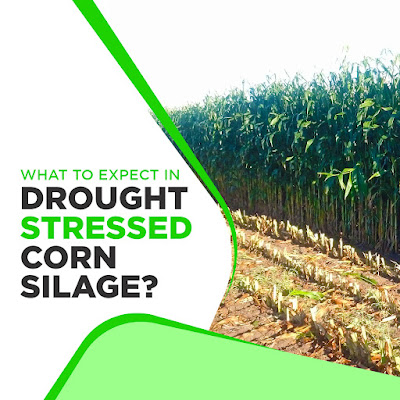
  This year's growing season has been quite different in many parts of the country. During the drought season, crops we produce for cattle feed experienced mild to heavy drought stress in many areas. In this post, we will gawk at strangers. At Silage Agro, the best manufacturers of Silage Rajasthan , mean look at the challenges you need to expect with drought-stressed corn silage and what you should look out for. What is drought? A simple definition of drought is a prolonged period without any rain. Your crops can get varying degrees of drought stress, and its severity can cause a dramatic commotion during dry and hot weather in a short time. Some risks you should know about in drought-stressed corn silage Silage Agro believes that keeping these risks in mind and learning how to tackle such threats can save you costs and time. If all this confuses you, contact us to get an early supply of NutriMeal Silage for such conditions. Nitrates: If you have harvested any crop d...

Hay vs. Silage: Which One Is Better?

Image
  Some say hay, others don’t say ho, but Silage for Animals . Since the creation of silage, people have been arguing about which one of the feeds is better? You see, when it’s about food, like most other things in life, the natural, the better. What you feed your cattle has a direct effect on health and the byproduct. You commonly have a few options to feed your livestock. One of those options is Sugarcane Silage Punjab . Silage is a preserved pasture that allows you to provide your cattle continuously when grazing is not an option. So, why is silage becoming popular over the years? And, how does it compare to hay? As Silage Agro, Punjab Silage Private Limited will discuss it today. What is Hay? Hay is grass, herbs, or other herbaceous plants that we cut and dry to store as animal fodder, commonly for grazing animals. Of course, we raise livestock, such as cattle, horses, goats, and sheep. But we can also feed it to smaller domestic animals such as rabbits and guinea pigs. ...

How is Silage Made?

Image
  The intention of silage manufacturing is to limit organic degradation and preserve digestible vitamins. For This, Oxygen must be removed, and silage acidity should grow hastily so that lactic acid microorganisms grow and stabilize the Silage. The four levels are the aerobic phase, lag phase, fermentation phase, and substantial segment. By ceasing the fermentation, silage temperature should attain a final low pH, preventing bacterial increase. Fast silo filling, correct packing, and tight sealing are vital for oxygen removal. Particle length and moisture content material will affect packing. Silage with precise aerobic balance (bunk existence) has minimal heating after feed out. How Silage is Prepare During the Silage making technique, the pasture is cut while the grasses incorporate the best nutrient tiers. This stage is attained just before they're entirely mature. Process In Silage Making:  Selection of Crops and Picking Right Time For Cutting The choicest d...

Find Which Type Of Silage Is Best For Your Farm

Image
  Silage is preserved pasture. Making silage is an essential way for farmers to feed cows and sheep for the duration of instances when pasture is not precise, inclusive of the dry season. Find out how silage is made underneath. The grasses are reduced and then fermented to maintain plenty of nutrients (including sugars and proteins) as feasible. The fermentation is achieved by way of microscopic organisms living inside the grass. The technique must be executed under acidic conditions (round pH 4-five) to preserve nutrients and offer a form of meals that cows and sheep will want to devour. Fermentation at better pH affects silage with an awful flavor and lower amounts of sugars and proteins. The silage-making process is an art in itself. Different types of silages exist, including many hybrid ones. In general, the common classification under which the silages are separated are: ● High-moisture silage (< 30% dry matter) ● Medium-moisture silage (30 – 40% dry matter) ● ...

Handle These Situations to Make High Quality Silage

Image
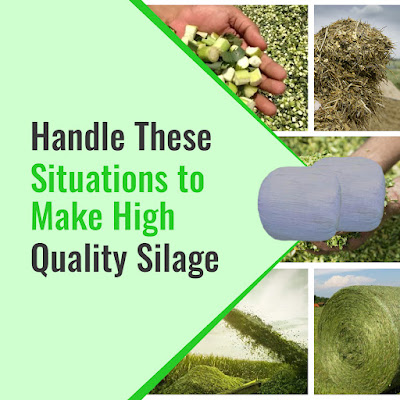
It doesn't matter how strongly you plan and manage your silage production plans. However, some uncontrollable weather and wildlife can delay our plan to cover our crop or air-reintroduction time. If you are trying to fend off expected cases, you understand that uncontrollable situations like these can give you a tough time. Fortunately, we at Silage Agro have got some tips for you to handle even uncontrollable situations and produce high-quality silage. How to control uncontrollable situations? Let us look at the three everyday unexpected situations you can handle with our tips and produce high-quality sugarcane, corn, grass, and Wheat Silage . Air stress issue During storage, we must ensure that the farm atmosphere remains completely anaerobic so that the silage quality remains stable until we open it and feed it to our lovable animals. However, even if we apply the best management method, unpredictable conditions can allow air to work its way into your Silage Bales . L...

Get The Most From The Silage Bales With The Right Storage Strategy

Image
  The moment farmers bale their silage, losses start. If farmers do not adequately look into it, the losses can become large, becoming a big issue. On the other hand, appropriately protecting their silage bales from elements such as heat, air, etc., can reduce the losses and make the fodder last longer. So what’s the best solution? Causes of loss in silage bales So the big question before handing over the solution is what causes these losses? Here’s the answer. When farmers bare big round silage bales to moisture and directly store them on the ground, it can lead to large-scale losses from water attack, spoilage, pest, and disease problems. High-humidity environments can also spoil these bales quickly if left uncovered. Another factor that affects dry matter losses is the amount of rainfall on unprotected bales. However, rainfall is not the only factor that farmers should consider when predicting DM losses. Microbial respiration can also affect DM losses. It occurs when carbo...

Five Elements Of Top Quality Silage

Image
Feed interests for the largest share of production costs on a farm. To spotlight this fact, we should understand that farmers are thinking of new ways to save feed costs. However, lesser feed costs should not compromise quality. The best way to prohibit it is to include high-quality silage in dairy cattle rations. Elements for your top quality silage Here is the section you all were waiting for:- Moisture Content When you want to find out the proper time to yield the Corn Silage For Sale , the moisture content is critical. The perfect moisture content is 65 percent, more or less. Silage with more than 70 percent moisture content means that bacteria can grow, leading to more dry matter and less palatability. Even though DM is necessary for silage, palatability is also an essential element. On the other hand, if the moisture amount is less than 60 percent, it means your silage will be much challenging to pack and lead to more air in the product, leading to lower density and mol...